
Lasix Injection 20mg 50 x 2ml ampoules (Furosemide) – Sanofi
June 15, 2026
Nevanac Eye Drop 0.1% 5ml(Nepafenac) – Alcon
June 15, 2026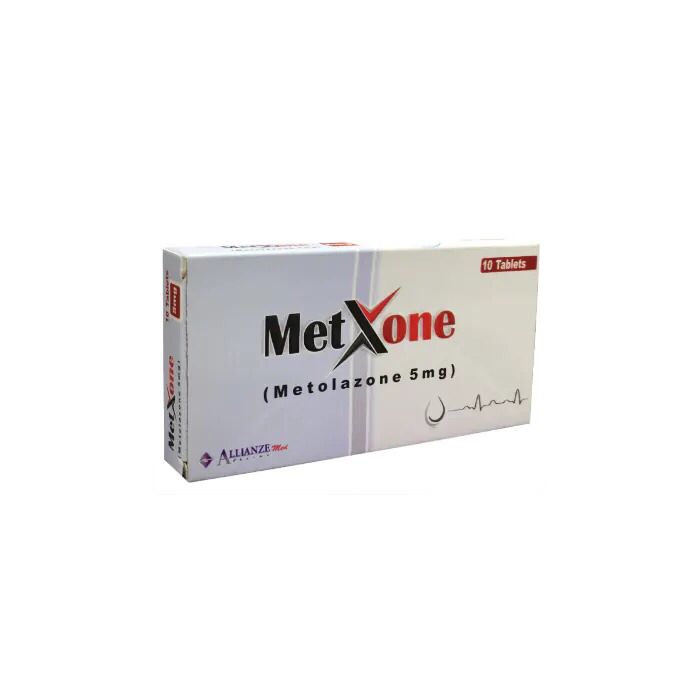
Metxone Tablet 5mg (Metolazone) – Allianze Med
Hypertension
How it works
It is a quinazoline diuretic, with properties generally similar to the thiazide diuretics. The actions of Metolazone result from interference with the renal tubular mechanism of electrolyte reabsorption. Metolazone acts primarily to inhibit sodium reabsorption at the cortical diluting site and to a lesser extent in the proximal convoluted tubule. Sodium and chloride ions are excreted in approximately equivalent amounts. The increased delivery of sodium to the distal-tubular exchange site results in increased potassium excretion.
Usage And Safety
Dosage
Edema : Edema of cardiac failure: Metolazone 5-10 mg, once daily , Edema of renal disease: Metolazone 5-20 mg, once daily ; Hypertension: Mild to moderate essential hypertension: Metolazone 2.5 – 5 mg, once daily . OR As directed by your physician.
Side Effects
Cardiovascular: Chest pain/discomfort, orthostatic hypotension, excessive volume depletion, hemoconcentration, venous thrombosis, palpitations. Central and Peripheral Nervous System: Syncope, neuropathy, vertigo, paresthesias, psychotic depression, impotence, dizziness/lightheadedness, drowsiness, fatigue, weakness, restlessness, sometimes resulting in insomnia), headache. Dermatologic/Hypersensitivity: Necrotizing angitis (cutaneous vasculitis), Stevens-Johnson Syndrome (SJS), Toxic Epidermal Necrolysis (TEN), purpura, dermatitis (photosensitivity), urticaria and skin rashes. Gastrointestinal: Hepatitis: intrahepatic cholestatic jaundice, pancreatitis, vomiting, nausea, epigastric distress, diarrhea, constipation, anorexia, abdominal bloating. Hematologic: Aplastic/hypolastic anemia, agranulocytosis, leukopenia
Drug Interactions
Alcohol, barbiturates, or narcotics , Antihypertensives , Corticosteroids or ACTH Therapy , curariform drugs (such as tubocurarine) , Digitalis , Drugs Used to Treat Gout , Furosemide and Other Loop Diuretics , Insulin and Oral Antidiabetic Agents , Lithium , Methenamine , Salicylates and Other Nonsteroidal Anti-inflammatory Agents , Sympathomimetics.
Indication
Metolazone is indicated for the treatment of edema accompanying congestive heart failure and edema accompanying renal diseases including the nephrotic syndrome and states of diminished renal function. Metolazone has also been used in the management of mild to moderate essential hypertension alone or in combination with other antihypertensive drugs of a different class.
When not to Use
It is contraindicated in anuria, in hepatic coma or pre-coma, and in cases of known allergy and hypersensitivity to metolazone.
Precautions
All patients receiving metolazone should have serum electrolytes measured at appropriate intervals and be observed for clinical signs of fluid and/or electrolyte imbalance; namely, hyponatremia, hypochloremic alkalosis, and hypokalemia. Serum and urine electrolyte determinations are particularly important when the patient is vomiting excessively, has severe diarrhea, or is receiving parenteral fluids.
WARNINGS
The rapid onset of severe hyponatremia and/or hypokalemia has been reported following initial doses of thiazide and non-thiazide diuretics. When symptoms consistent with severe electrolyte imbalance appear rapidly, the drug should be discontinued and supportive measures should be initiated immediately. The appropriateness of therapy with this class of drug should be carefully re-evaluated.
Hypokalemia may occur, with consequent weakness, cramps, and cardiac arrhythmias. Hypokalemia is a particular hazard in digitalized patients or those who have had or have a ventricular arrhythmia; dangerous or fatal arrhythmias may be precipitated. Serum potassium should be determined at regular intervals, and dose reduction, potassium supplementation or addition of a potassium sparing diuretic instituted if indicated. Hypokalemia is dose related.
Azotemia and hyperuricemia may be noted or precipitated during the administration of metolazone. Infrequently, gouty attacks have been reported in persons with a history of gout. If azotemia and oliguria worsen during treatment of patients with severe renal disease, metolazone should be discontinued.
Additional Information
Pregnancy category
Always consult your physician before using any medicine.
Storage (YES/NO)
Store this medicine at room temperature, away from direct light and heat.


Reviews
There are no reviews yet.